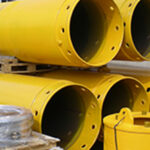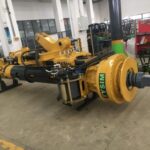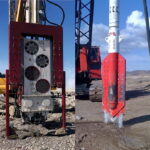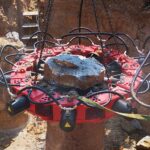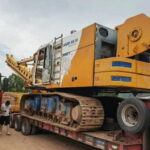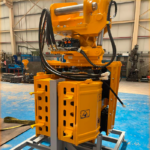
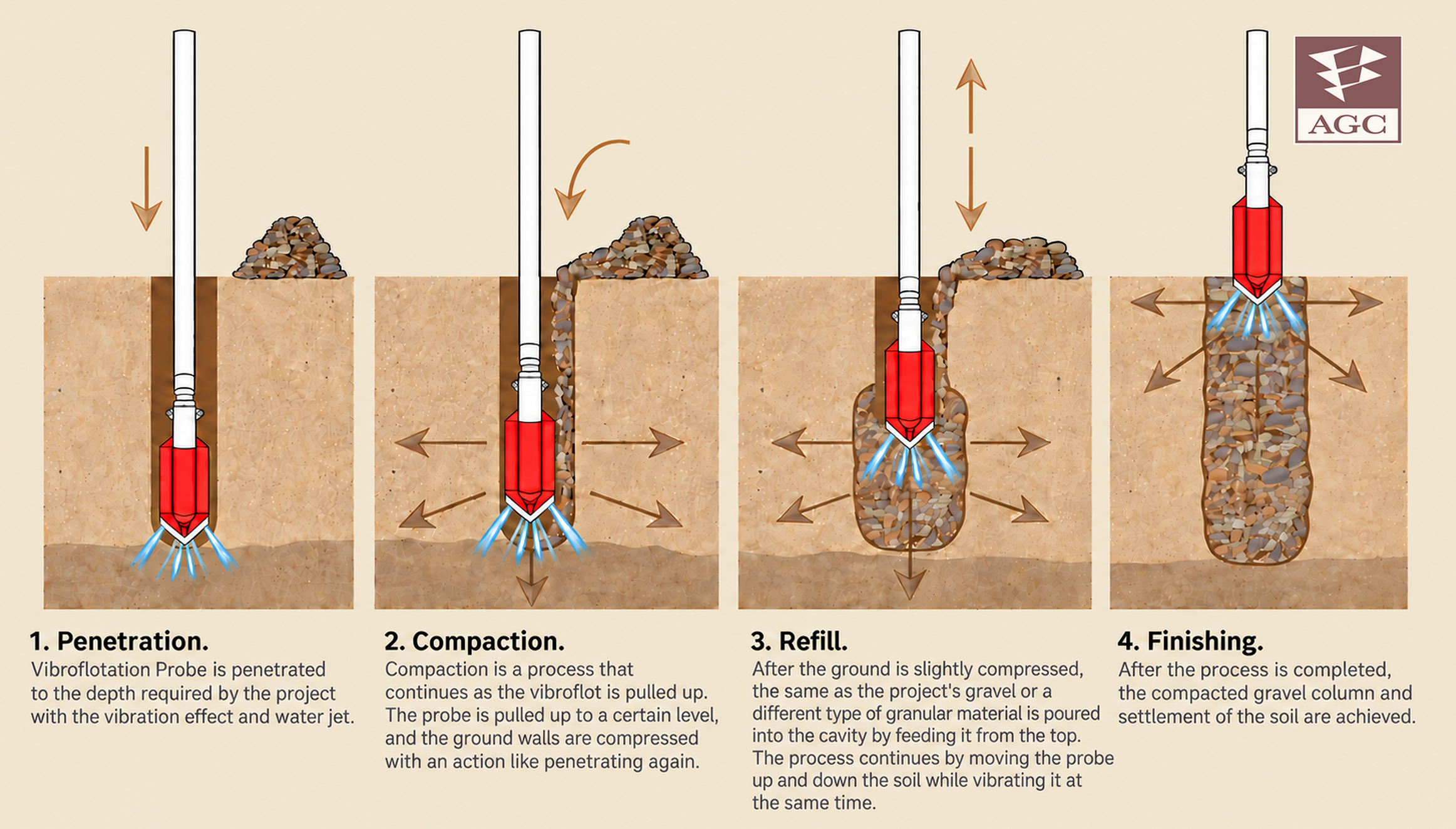
Top Feed Vibroflotation (Vibro Compaction) method is typically used for loose, medium- and coarse-grained soils that can be compacted by vibration. By simultaneously applying vibration and water saturation via the Vibroflotation Probe, soil particles rearrange into a denser state, increasing soil density.
Once the soil has been partially compacted, material (such as crushed stone or other granular material specified in the design) is backfilled into the resulting cavity from above.
Typical applications for this method include land reclamation projects and railway and road construction.
Vibro compaction technology is best suited for medium-to-coarse sands containing some silt-sized particles.
Cohesive soils consisting of silt and clay do not respond to vibratory compaction.
The operating principle is illustrated below:
The typical equipment configurations of the Vibro Compaction technique:
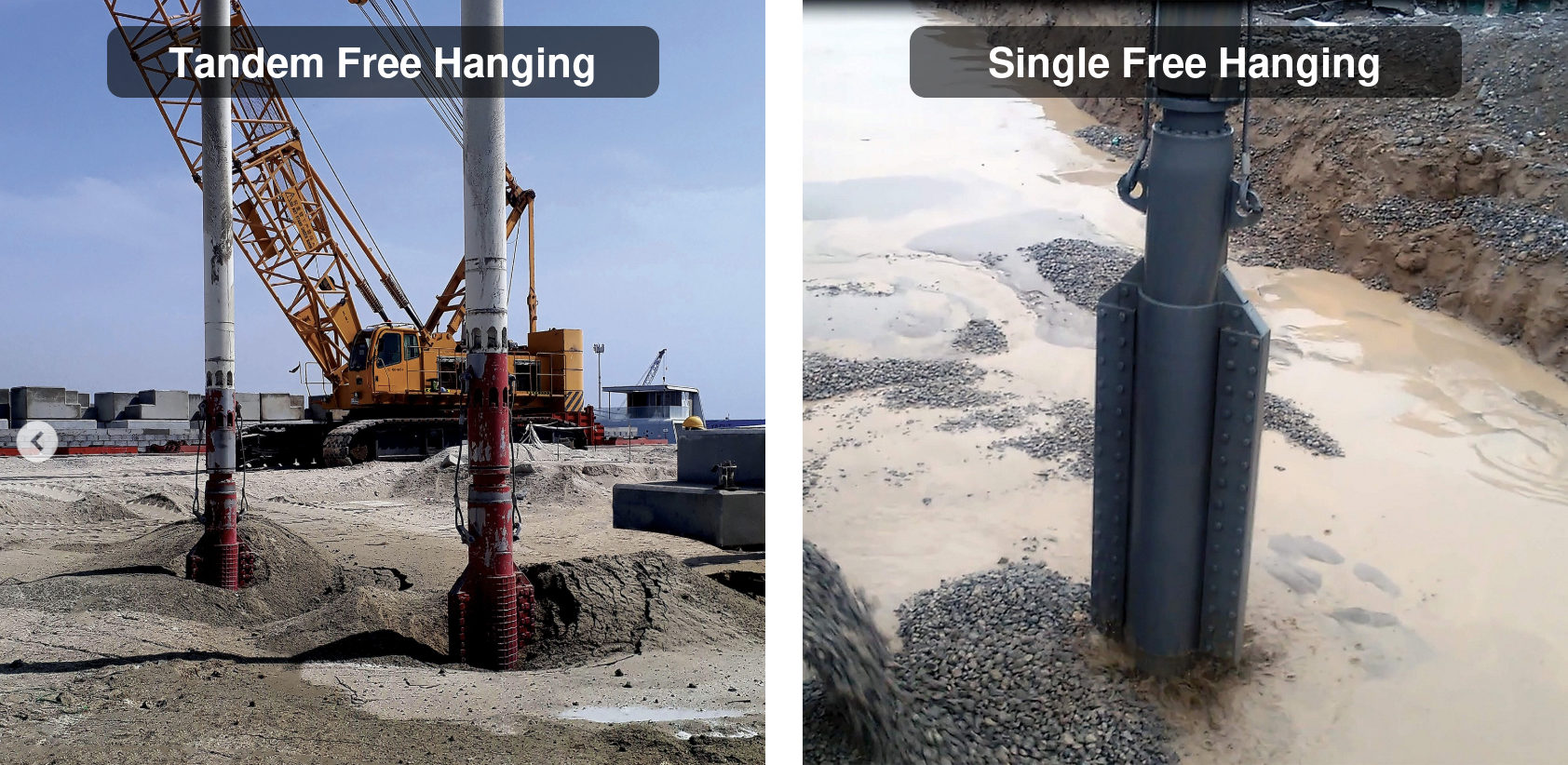
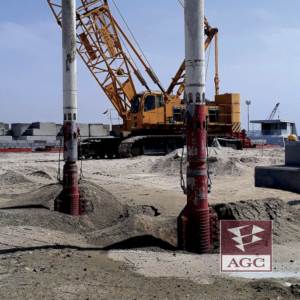
Tandem Free Hanging Vibro Compaction configuration consists of two Vibroflotation Probes suspended from a single crane. It is most commonly used in land reclamation, railway and road construction projects, and other similar large-scale projects.
Single Free Hanging suspended Vibroflotation Probes utilizes the same interchangeable components as the tandem system.
When using a single suspension system, productivity is somewhat lower compared to the tandem configuration. This method is more commonly used in small and medium-scale projects.
However, it should be noted that a single-probe system allows for the creation of deeper densified zones or soil-stone columns.
Furthermore, compared to a tandem system, a single vibro-probe requires less powerful lifting equipment.
The quality of compaction or the formation of the soil-aggregate column can be monitored using a Data Logger supplied by OMS. This system can be applied to both the Tandem Free Hanging and the Single Free Hanging configurations.
This allows for the measurement and tracking of parameters such as depth, compaction speed, the dynamics of the compaction and probe-extraction processes, and the volume of crushed stone used.
Cannot find what you are looking for? Get in touch, and we will gladly assist you further. Contact Us